


Business Loan for MSMEs: Eligibility, Documents & Best Practices
How MSMEs and small business owners in India can secure a business loan in 2026 - eligibility criteria, required documents, government schemes, and tips to improve approval odds.
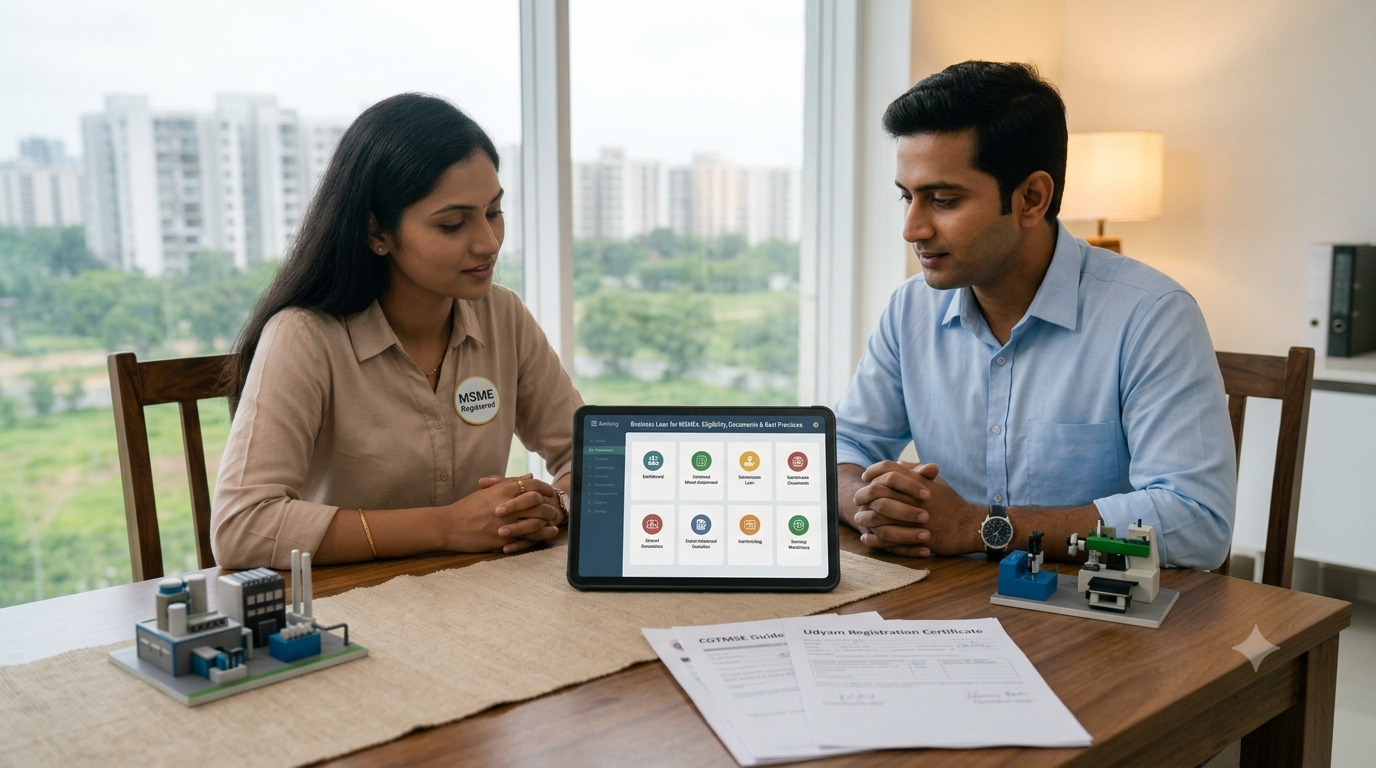
Why MSME Financing Deserves Its Own Strategy
Small and medium businesses often struggle to access credit not because they're unviable, but because their financial documentation doesn't match what conventional underwriting expects. Understanding what lenders actually look for turns this from a guessing game into a plannable process.
Types of Business Loans Available
Options range from working capital loans and cash credit facilities for day-to-day operations, to term loans for equipment or expansion, to loans backed by government schemes like the Credit Guarantee Fund Trust for Micro and Small Enterprises (CGTMSE), which allows collateral-free lending up to specified limits by covering the lender's risk.
Eligibility Criteria Lenders Look At
Business vintage (most lenders prefer at least 2-3 years of operations), turnover trends over recent years, existing debt obligations and repayment track record, the promoter's personal CIBIL score, and industry sector are all weighed together. A business with modest but consistent, well-documented growth is often viewed more favourably than one with volatile, unexplained swings in revenue.
Documents That Make or Break the Application
Beyond the basics of KYC, ITRs and bank statements, lenders scrutinise GST returns for turnover consistency, audited financial statements, existing loan repayment history, and increasingly, digital footprint data like UPI and POS transaction volumes for smaller businesses without formal audited books.
Government-Backed and Priority Sector Schemes
MSMEs registered under Udyam can access several government-supported credit schemes offering collateral-free loans, interest subvention, or faster processing, since MSME lending is treated as a priority sector by regulators. Registering your business under Udyam, if you haven't already, is one of the simplest steps that opens up meaningfully more financing options.
How to Strengthen a Weak Application Before Applying
Regularise GST filing consistency, keep your current account activity clean and aligned with declared turnover, clear any overdue trade payables that show up in credit reports, and consider a smaller collateral-backed loan first to build a repayment track record if you're new to formal borrowing.
Perfect Solutions Understands MSME Realities
We work with lenders who evaluate small business applications with practical judgment rather than rigid, one-size-fits-all criteria, and we help you present your business's financial story, sales trends, order pipeline, and growth trajectory, in a way that gives underwriters real confidence.
Common questions
Frequently asked questions
Can I get a business loan without collateral?
Yes, particularly through government-backed schemes like CGTMSE that guarantee a portion of the loan for the lender, allowing collateral-free lending up to specified limits for eligible MSMEs.
Does Udyam registration help in getting a business loan?
Yes, Udyam-registered MSMEs get access to priority sector lending benefits, certain government scheme eligibility, and are often viewed more favourably by lenders for their formalised status.
What's the minimum business vintage required for a loan?
Most conventional lenders prefer at least 2-3 years of operating history, though some newer-age lenders and NBFCs offer working capital products for businesses with as little as one year of vintage, often at a higher rate.
Not sure which loan fits?